
Ebola disease outbreak in the Democratic Republic of the Congo and Uganda
This page is updated as more information becomes available. It was last updated 23 June at 15:25.
As of 23 June 2026, the Ebola disease outbreak caused by Bundibugyo virus is affecting the Democratic Republic of the Congo (DRC) and Uganda.
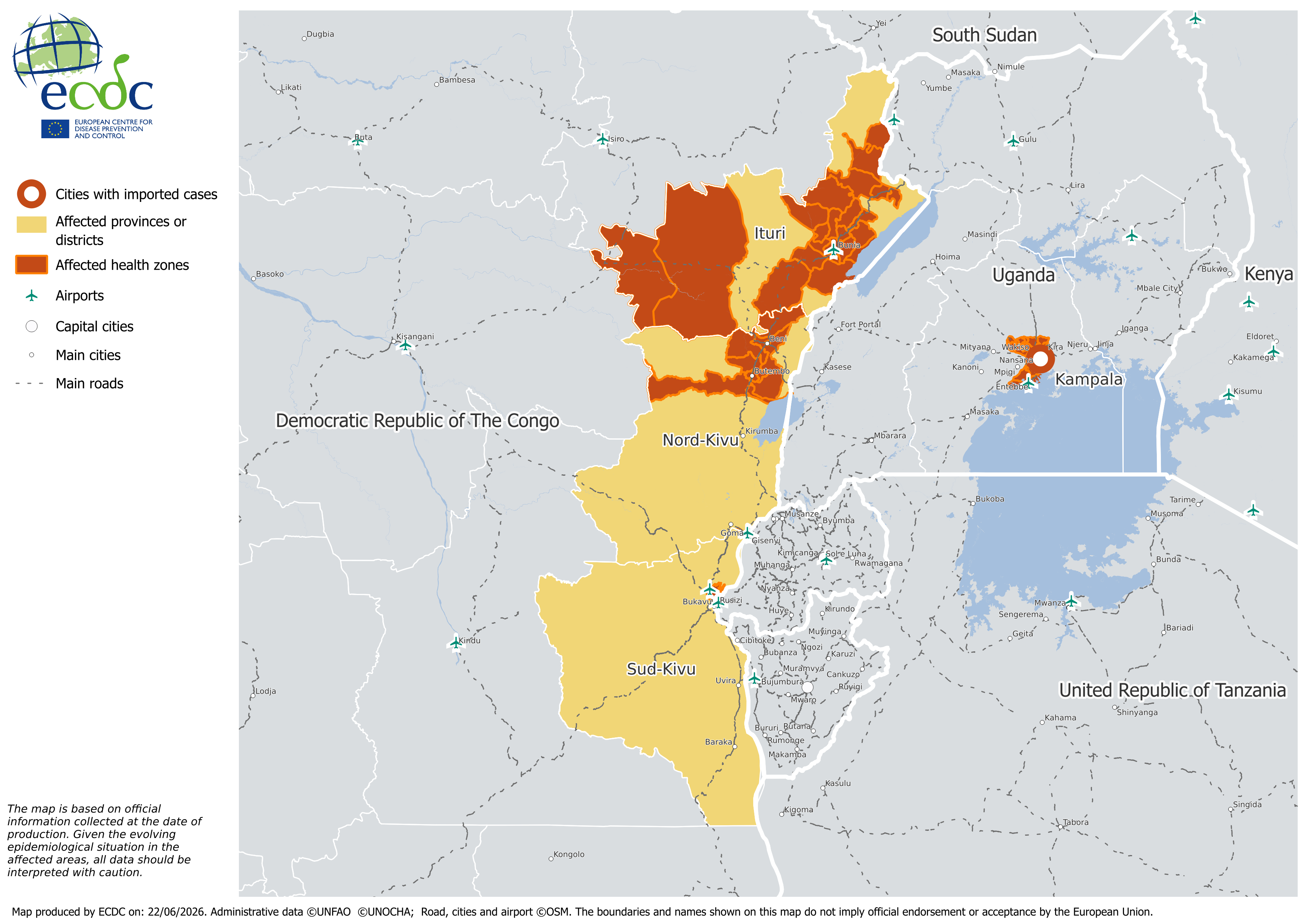
On 22 June, the DRC Ministry of Health reported a total of 1 048 confirmed cases, including 267 confirmed related deaths, and 371 individuals hospitalised in isolation (as of 21 June). Included in this report are 45 new confirmed cases and 13 new deaths since the last update on ECDC’s website on 22 June (data as of 20 June).
Ituri is the most affected province, with 954 confirmed cases from 22 health zones. In North Kivu, 91 confirmed cases have been reported from 11 health zones, and in South Kivu, three cases from one health zone. Since the previous update, no new affected health zones have been reported in the three provinces. Data are continuously being reviewed and harmonised as samples from suspected Ebola cases go through the process of laboratory confirmation.
As of 23 June, Uganda had reported a total of 20 confirmed cases, including two deaths. The most recent case was reported on 21 June, and no new cases have been reported since. Among the confirmed cases, 15 had travel links to DRC and five were associated with local transmission events. Of nine cases with known geographical information, eight were reported in Kampala and one in the neighbouring district of Wakiso.
Although information remains limited, we assess the likelihood of infection for people living in the European Union/European Economic Area (EU/EEA) as very low. ECDC continues to monitor the situation closely and will update its assessment as new information becomes available.
A weekly update on this outbreak is available in the weekly Communicable disease threats report.
Areas affected by the ongoing Ebola disease outbreak
Read the threat assessment

Questions and answers

Basic facts about the current Ebola disease outbreak in the Democratic Republic of Congo and Uganda.

Questions and answers about the current outbreak of Ebola disease for healthcare professionals in Europe.
Resources and guidance

Guidance, training materials and operational resources for public health authorities, healthcare professionals and transport operators.

Laboratory guidance, diagnostic protocols and technical resources for laboratories.

Communication materials and resources for the public, healthcare professionals, airlines and airport staff.


